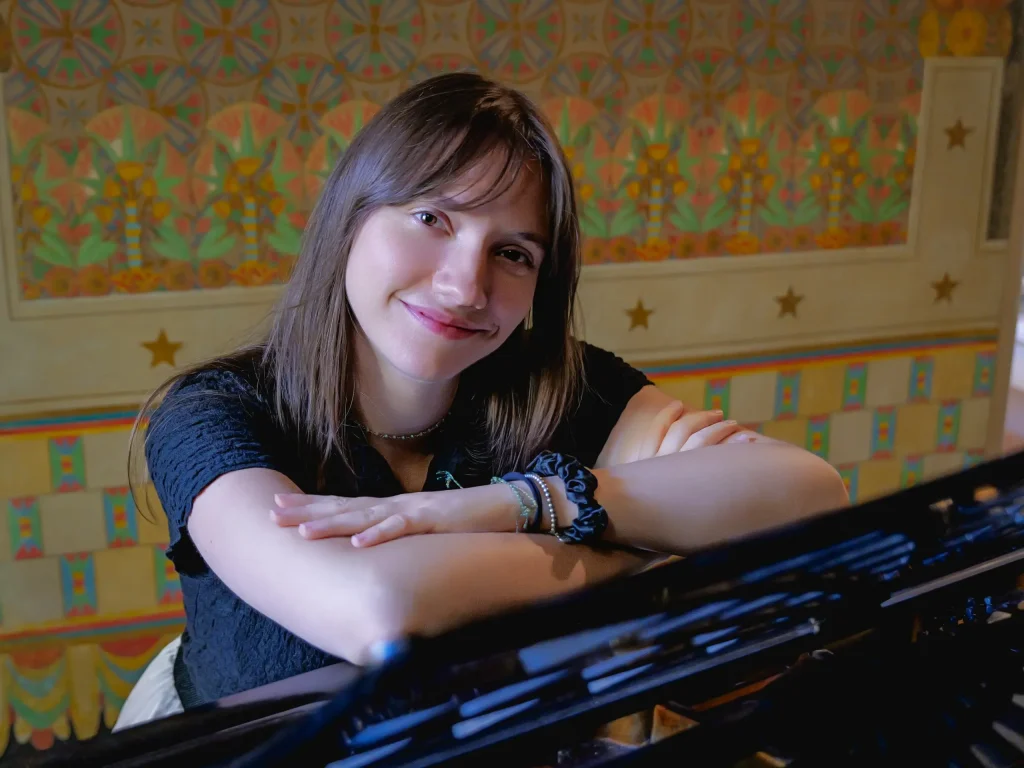
There are cities that you visit once, and others that, instead, keep calling you back.
For me, Bologna definitely belongs to the second category. I lived there for three years while completing my Master’s degree in Musicology and, almost without realizing it, the city became a second home. It is the place where I grew as a musicologist and as a singer, where I began to look at jazz through different eyes, and where, even today, I return each time with the feeling of finding something familiar again.
Perhaps this is precisely Bologna’s special gift: its ability to welcome people without asking them to be anything other than who they are. You only need to walk beneath its portici to realize that culture here does not belong solely to museums or theatres, but is part of everyday life.
Music leaves the conservatories, enters the clubs, crosses squares and streets, mingles with conversations in pastry shops, and accompanies anyone who feels like stopping to listen.
It is therefore no surprise that, in 2006, Bologna became the first Italian city to be designated a UNESCO Creative City of Music, joining the international Creative Cities Network. This is not merely a symbolic title: it recognizes a musical tradition built over the centuries and, at the same time, the vitality of a contemporary scene that continues to renew itself thanks to its musicians, institutions, numerous festivals, and the many places where music is created, taught, and shared every day.
For those who love jazz, Bologna represents something even more special. The city preserves a history whose roots lie in the post-war period and which experienced one of its most significant moments with the International Jazz Festival, conceived by Alberto Alberti in the late 1950s. That festival helped transform Bologna into a European point of reference, bringing major figures from the history of jazz—American and otherwise—to the city and leaving a legacy that continues today through the Bologna Jazz Festival. Every year, the festival creates a dialogue between international artists and the Italian scene, confirming Bologna’s central role within the national—and international—jazz landscape.
This memory does not live only in concert programmes or archives. It also lives in the streets. While walking through the heart of the Quadrilatero district, you come across La Strada del Jazz, a route inaugurated in 2011 that pays tribute to the great musicians who performed in Bologna through marble stars set into the pavement. Ella Fitzgerald and Sarah Vaughan are among them! It is a place that I enjoy walking through slowly, reading the names and imagining the stories, almost as though the city had decided to transform its musical past into something tangible, something that can be encountered during a simple walk through the city.
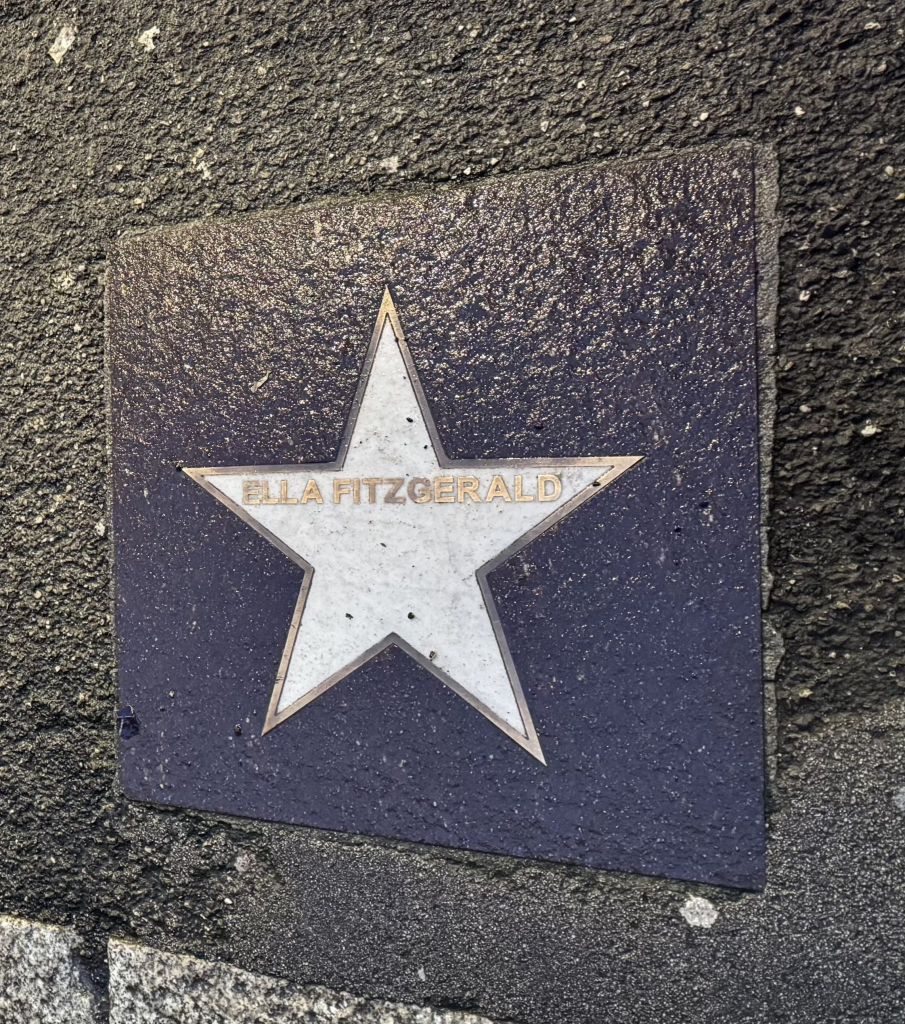
Ella Fitzgerald’s star
La Strada del Jazz, between Via Orefici and Via Caprarie
Every time I return, I realize that I am looking at Bologna differently. During my university years, it was the city where I studied and lived; today, it has also become the place where I listen, meet people, learn, and build relationships. Walking through these streets means returning to familiar places while also continually discovering new ones: a jazz club hidden behind a doorway in a tiny street in the city centre, a jam session emerging from the courtyard of a building, or a concert that eventually turns into a long conversation in a painter’s studio in the hills.
This is precisely what makes Bologna so precious to me. Here, jazz is not merely a musical genre or a season of concerts: it is a community made up of people who continue to meet, play together, discuss, teach, pass on their experiences, and welcome those who arrive with the desire to listen and share.
And it is this community that, over the past few months, I have once again had the privilege of joining.
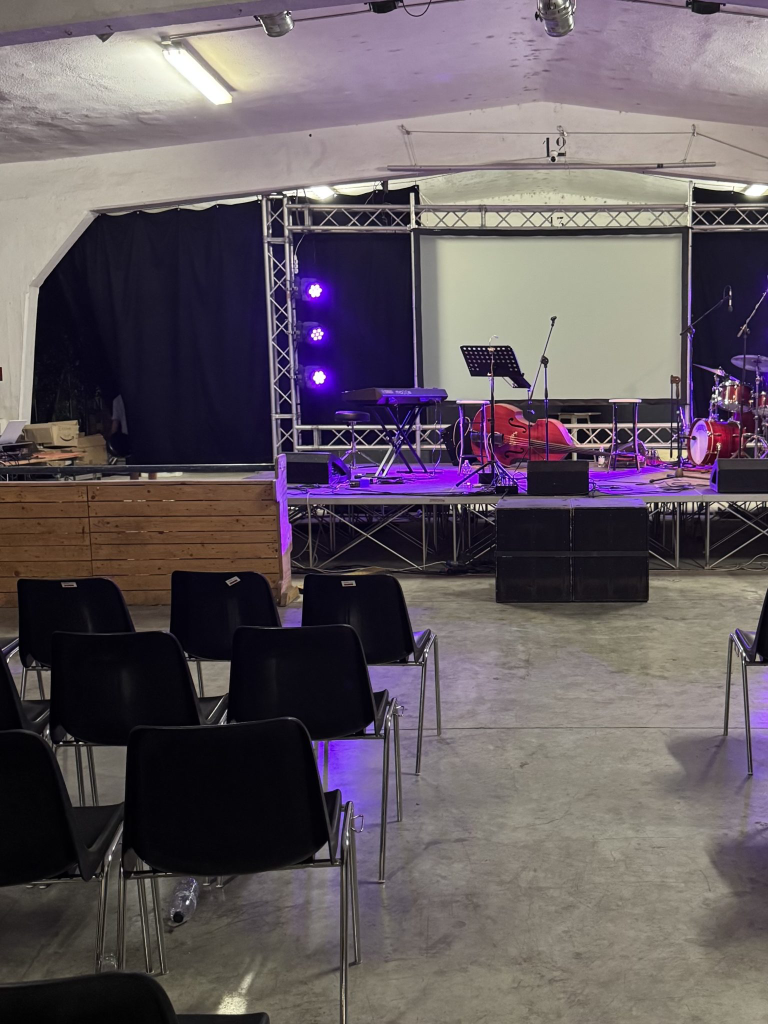
From a summer concert by singer Valentina Mattarozzi dedicated to New Orleans, DUMBO, 2026
Photo: Mary Blengino
The people beyond the music
One of the greatest gifts Bologna has given me over the past few months has been the people I have met.
Behind every concert, every rehearsal, and every jam session were people with whom I could stop to talk, share a coffee or dinner after a live performance, exchange stories about different musical journeys, and discover—almost without realizing it—just how deeply jazz is able to create connections between those who live it every day.
I had the privilege of meeting extraordinary musicians such as Valentina Mattarozzi, Giulia Barba, Manu Napolitano, Matilde Sabato, Michela Calzoni, Mary Tracanna, Indaco Trio, Duo As Madalenas, and many other wonderful artists with whom I had the honour of exchanging ideas and whose music I greatly admired. Each of them possesses a deeply personal artistic voice, shaped by different experiences, influences, and musical languages, and this diversity is perhaps the greatest richness of the Bolognese jazz scene.
It was wonderful to discover in Valentina Mattarozzi a singer capable of combining the jazz tradition with a highly personal artistic research, always attentive to both repertoire and storytelling. Among her many projects, I was particularly struck by the musical and theatrical production I am Billie – Tribute to Billie Holiday, dedicated to one of the greatest voices in jazz history. Rather than simply reinterpreting Holiday’s repertoire, the performance succeeds in conveying the artistic and emotional complexity of her life. I especially appreciated the way Valentina describes the project, emphasising the importance of simplicity:
“…without using unnecessary embellishments that would cover the beauty of Billie’s simplicity, the very simplicity that touched listeners’ hearts so deeply through the emotional power she consistently brought to her performances…”
With Manu Napolitano, an Italian-Venezuelan guitarist, singer, and songwriter, our conversations naturally expanded beyond music itself. Jazz, Brazilian music, and Latin American sounds coexist throughout her projects, while her compositions also explore social and feminist themes with great sensitivity and through a deeply personal musical language. Two remarkable examples are “BALLARE” (2021), created together with the Italian ska band Le Tremende, and “Muitas Marias” (2019), an intense tribute to Marielle Franco, the Brazilian city councillor and human rights activist who was assassinated in Rio de Janeiro in 2018.
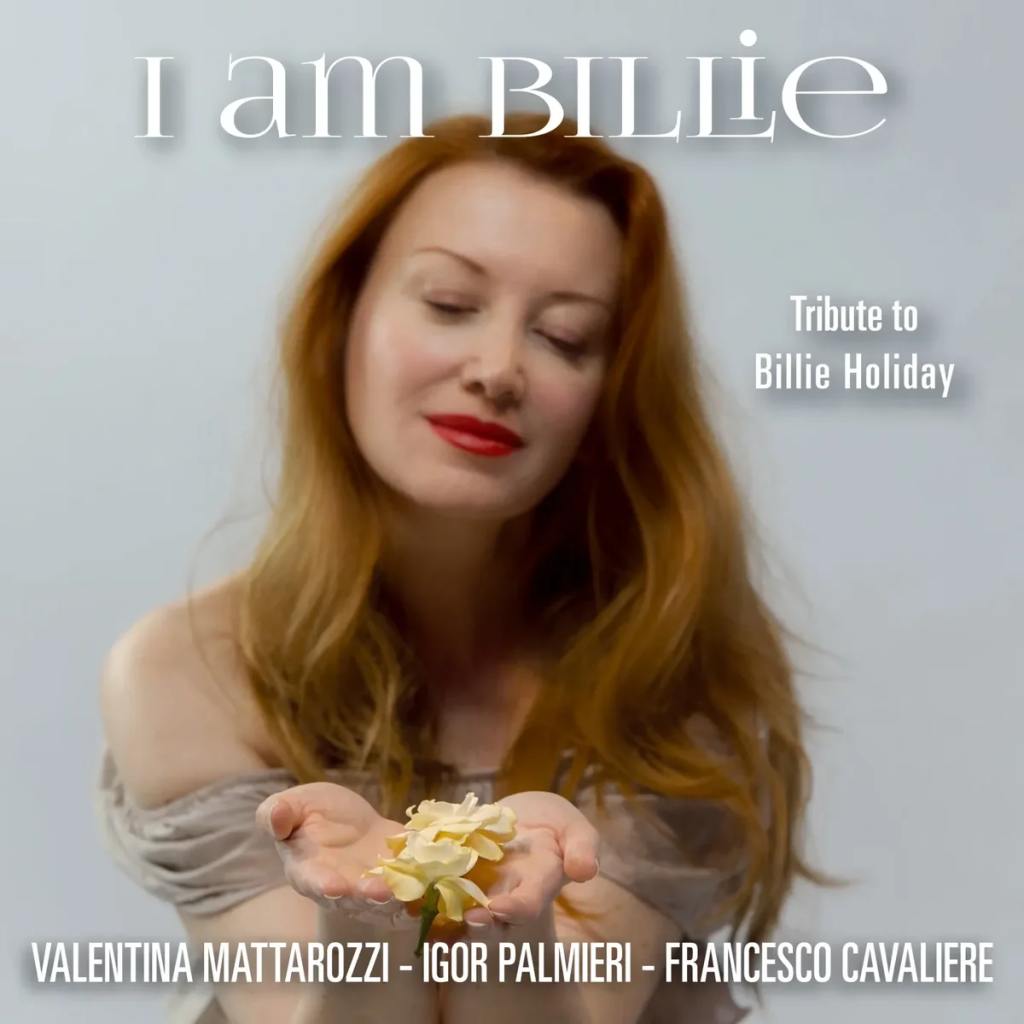
Valentina Mattarozzi’s album dedicated to Billie Holiday
Source: valentinamattarozzi.it
Duo As Madalenas, formed by Cristina Renzetti and Tati Valle, also embodies an encounter between cultures. Italy and Brazil are in constant dialogue throughout their music, which pays tribute not only to Antonio Carlos Jobim and the better-known bossa nova tradition, but also to composers such as Chico Buarque, naturally exploring the richness of Brazilian popular song and its close relationship with jazz.
This attention to the great female figures in music history also emerges in the work of Indaco Trio, featuring Silvia Donati (voice and percussion), Francesca Bertazzo Hart (guitar and voice), and Camilla Missio (double bass). Through their project D’Amore e d’Orgoglio, they pay an intense tribute to Billie Holiday and Nina Simone, two artists who transformed their music into a form of both artistic and civic expression, leaving a legacy that continues to inspire musicians around the world.
I also met Giulia Barba, a saxophonist who returned to Bologna after studying in Amsterdam and who is now active between Bologna and Ferrara with projects ranging from jazz to free improvisation; Matilde Sabato, who, after her career as a jazz singer, chose to explore new musical languages by moving towards electronic music, demonstrating how artistic research can constantly evolve without losing its own identity; and Michela Calzoni, a performer whose musical sensitivity is difficult to confine within a single definition. Her repertoire naturally embraces jazz, soul, blues, pop, and the Italian singer-songwriter tradition, following a philosophy that I deeply share: music does not like to be confined within categories because, as Oscar Wilde famously wrote, “To define is to limit.” It is precisely this freedom to move across different musical languages that makes every artist unique and impossible to replicate.
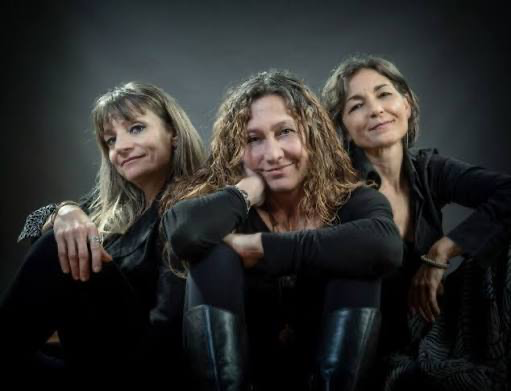
Indaco Trio
Source: facebook.com
Among the encounters that I will carry with me is also the one with Mary Tracanna, an artist with whom I also share a deep friendship. A guitarist devoted to traditional jazz and an important figure within Bologna’s increasingly vibrant young jazz scene, she is a regular presence at the jam sessions held at Sghetto Club, where her openness, generosity, and enthusiasm have helped foster an environment for musicians and jazz lovers alike. Her presence reminds us that a musical community grows not only through performances, but also through the people who bring others together, encourage new encounters, and help create lasting connections.
Naturally, these are only some of the artists I had the good fortune to meet, to make music with, and to share a few coffees with. It would be impossible to recount every conversation, every concert, and every person I met during this period. Yet, despite their very different musical paths, there was a common thread running through every encounter.
We did not speak only about technique, concerts, new projects, or—of course—the challenges of entering the artistic and jazz world as women.
We also spoke about freedom.
The freedom to be musicians without constantly feeling the need to prove one’s worth. The possibility of building a career while remaining faithful to one’s artistic identity, without sacrificing curiosity, ambition, or sensitivity. The difficulties that many women still encounter today in finding their place within a field that remains largely male-dominated, but also the shared conviction that meaningful change comes above all through the quality of one’s work, collaboration, and the ability to support one another, without fearing that “another woman on stage might steal our place”—a stereotype that remains one of the hardest to dismantle.
What I experienced in Bologna, however, was not an atmosphere of opposition.
Quite the opposite.
I found a community of women musicians looking towards the future with confidence, choosing dialogue over conflict, and continuing to believe that music can be a space of freedom, solidarity, and shared growth—for women and men alike.
It is much more than research
When I returned to Bologna, I carried many questions with me…
Some were about music, others about the stories of the women who live it every day, and still others about the ways in which an artistic community grows, changes, and continues to evolve over time.
I am leaving with far more questions than I had when I arrived!
But perhaps this is the greatest gift a city can offer a researcher: the opportunity never to stop nurturing one’s curiosity. Yet, alongside those questions, I also believe I am taking home the beginnings of a few answers.
The first is that jazz continues to be, above all, a profoundly human language. It lives in the relationships we build, in the conversations that continue after a concert, in rehearsals that last much longer than expected, in jam sessions, in advice exchanged over a croissant, and in the generosity with which musicians continue to share ideas, experiences, and music with one another. And I find it wonderful that this is something artificial intelligence will never be able to replicate.
The second is that there is an extraordinary network of women who, despite following profoundly different artistic and personal paths, are contributing every day to making this scene richer, more open, and more aware. None of them is seeking privileges or exclusive spaces. They simply wish to create, study, teach, compose, and perform with the same freedom granted to anyone else, expressing their artistic identity without fear and without ever having to sacrifice their authenticity.
The conversations we shared were never driven by the desire to set women and men against one another, but rather by the belief that the deepest change is born through dialogue, collaboration, and mutual support. In every one of them I found the same determination to build an increasingly open community, one that values differences as a source of richness rather than as an obstacle.
I believe this is precisely the direction in which we should continue to move. Not towards a musical world divided by ever more rigid boundaries and categories, but towards an environment where every person feels free to search for their own voice, to experiment, to make mistakes, to grow, and to share their journey with others. After all, art reaches its highest form when it ceases to be competition and becomes encounter (which is also why I have never been a great admirer of music competitions—but that is another story…).
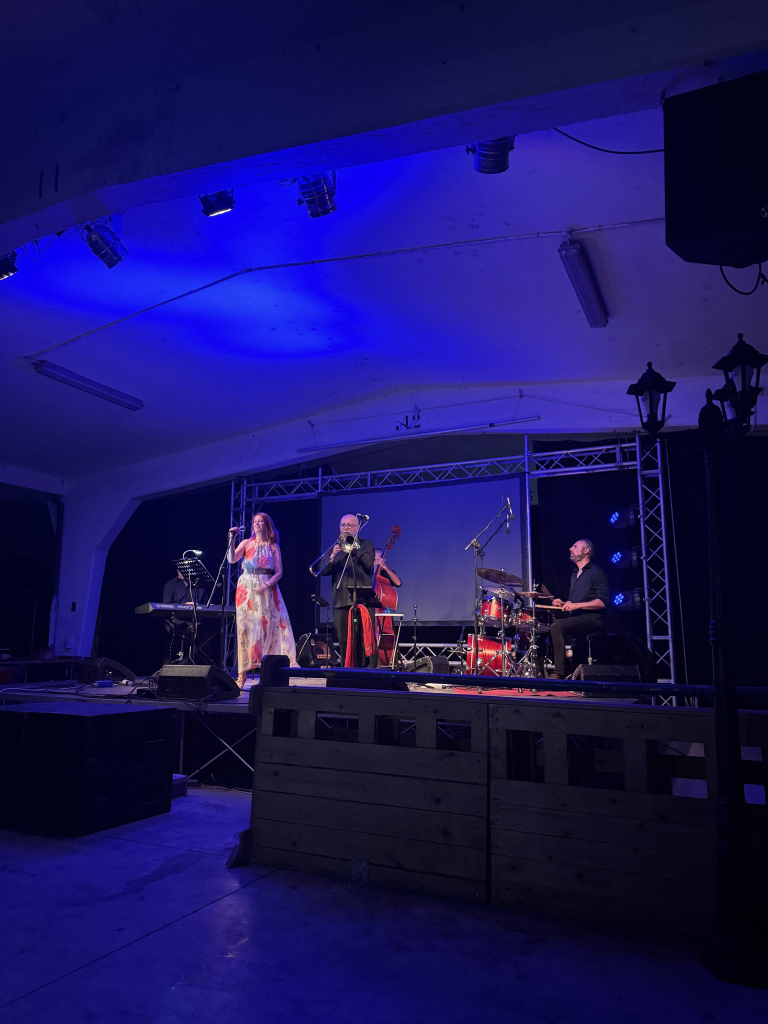
Excerpt from a concert by Valentina Mattarozzi, DUMBO, Bologna, 2026
Photo: Mary Blengino
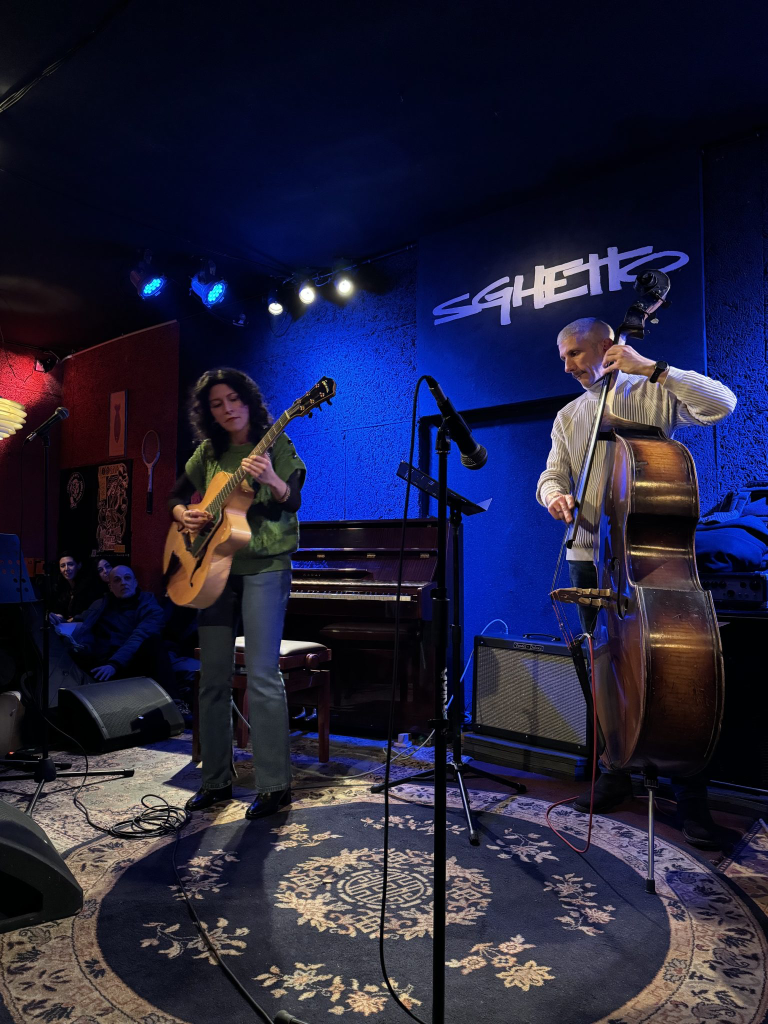
Mary Tracanna opening the jam session, Sghetto Club, Bologna, 2026
Photo: Mary Blengino
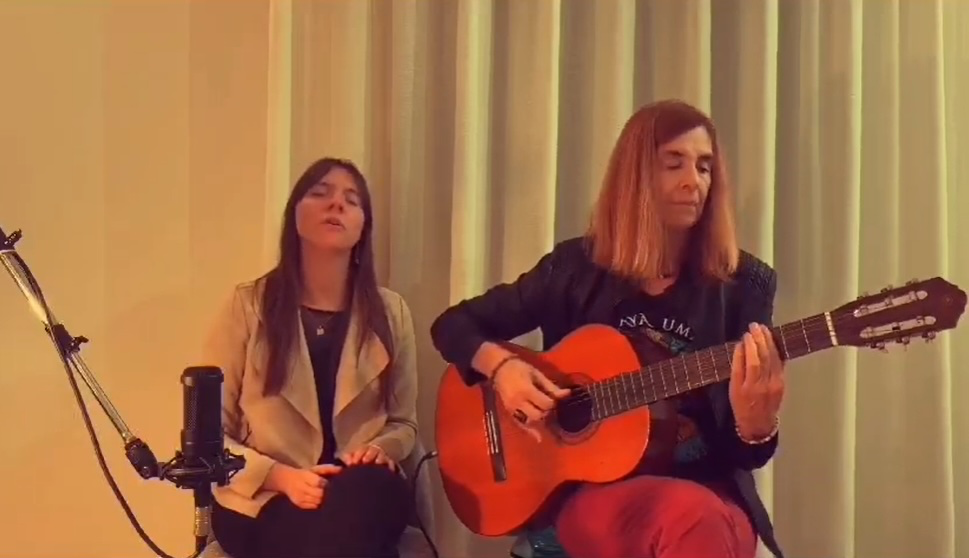
Recording session with Manu Napolitano, Bologna, 2024
Photo: Mary Blengino
These are some of the images of Bologna that I will carry with me.
A place that continues to remind me that music is not simply something to be studied, researched, or performed. It is something to be lived, day after day, through the people we meet and the relationships we choose to build.
And perhaps that is exactly why I always find myself coming back.
With kindness and swing, always.
Mary 🌹