Chapter 20
Between the sun, the water, and the voices of Portuguese Jazz: back to September
September in Austria, where I live, has a very particular charm.
Summer seems to slowly drift away, making room for that fresh, crisp air that announces the sudden arrival of autumn — all the more pleasant precisely because it comes so suddenly. The days begin to grow shorter, the mornings become cooler, and the sun, when it appears, almost seems to remind us of the final moments of the season that has just passed.
It is a time of year I am particularly fond of. For me, September also means my birthday (and this year, a very special one: 30 years old!), new projects, and that feeling of starting over that always accompanies the arrival of the autumn months.
And so, just as my mind was beginning to adjust to Austria’s cooler temperatures, there I was, packing my suitcase once again and heading south.
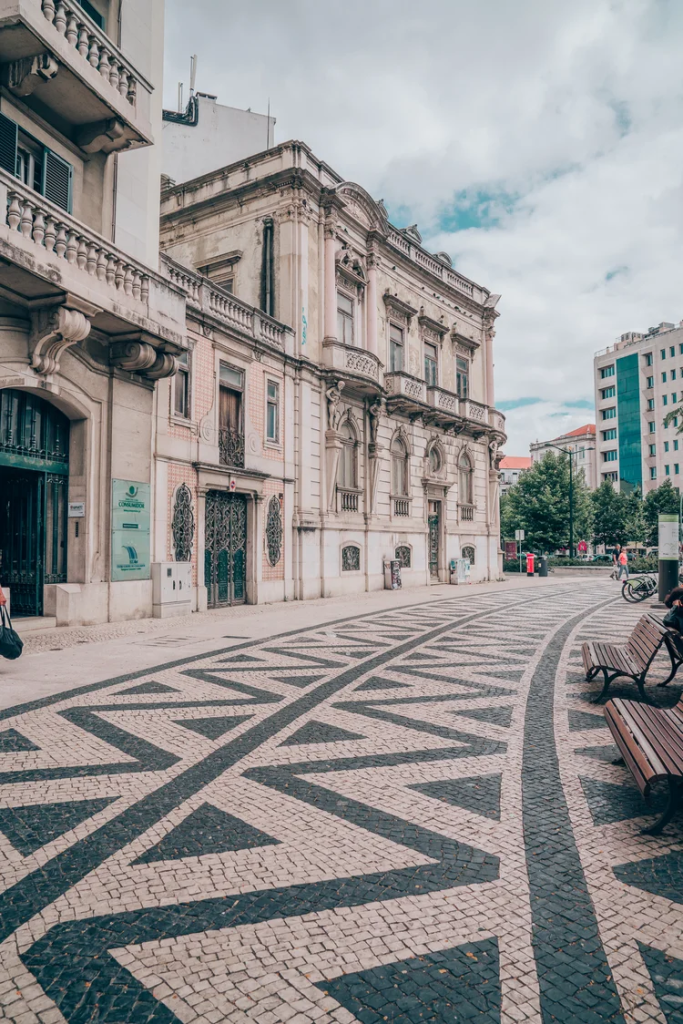
Destination: Lisbon, Portugal!
And what a surprise to find myself back in summer!
A warm, bright, almost dazzling sun welcomed me. The air still carried the feeling of summer holidays, while my mind had already switched into the autumn mode I had grown so accustomed to.
A curious contrast: my body returning to summer, while my mind remained suspended among the first yellow leaves, tinged with shades of red.
But Lisbon has something special about it. Something free, mysterious, difficult to describe.
It is a city that seems to hide a story behind every open door.
There is fado, seemingly drifting out of windows and small venues, as though it wanted to tell the secrets of those who have lived along these streets forever. There are the hills, the narrow alleys, the colourful façades, the decorated tiles, the sardines, and those little fish preserved in colourful tins that look like tiny works of art.
And then there is the sun. Always the sun.
And that river breeze that arrives unexpectedly, even when you least expect it, reminding you that Lisbon is a city that lives with its gaze turned towards the water.
And there I am, as always, with my eyes and ears wide open, ready to discover new stories, new sounds, and new women in jazz.
So…
Le Jazziste by Mary goes to Lisbon!
🌹 From Graz to Amsterdam, and Finally Lisbon: Meeting Beatriz Nunes Again
Some encounters happen only once. And then there are those that, almost as if by magic, keep happening again in different places.
This is precisely the case with Beatriz Nunes, a Portuguese singer, composer, and researcher.
The first time I met Beatriz was in Graz, Austria. Then our paths crossed again in Amsterdam. And finally, here we are in Lisbon, in her own city.
Three cities, three different occasions, and a shared passion: jazz and women in jazz.
I like to think of these encounters as little threads connecting people through music, crossing geographical and linguistic boundaries.
And after all, this is also one of the most beautiful aspects of my journey with Le Jazziste by Mary: discovering that the stories of women in jazz never belong to just one place, but continuously intertwine with other cities, other experiences, and other people.
So this time, I would like to tell you a little about Beatriz, her music, and her artistic journey.
🎤 Beatriz Nunes: between jazz, Portuguese music, and research
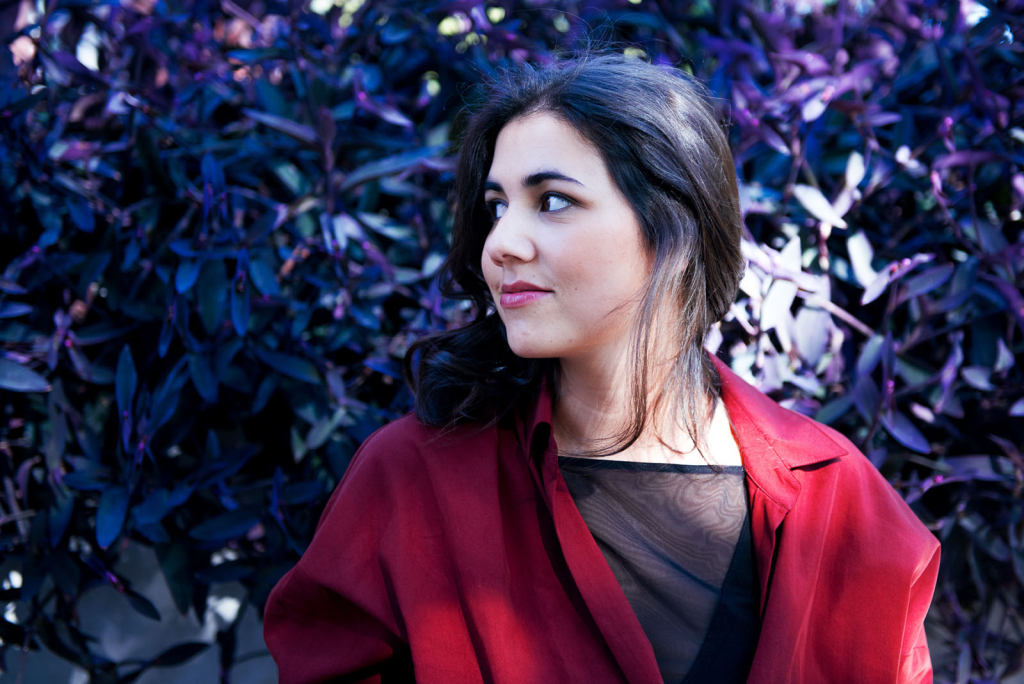
Born in Barreiro, Portugal, Beatriz Nunes is a singer, composer, and researcher whose musical background spans classical music, jazz, and Portuguese musical traditions.
A journey that already tells us a great deal about her musical identity: a voice capable of moving between different musical languages, without necessarily having to choose just one to belong to.
Since 2011, Beatriz has also been associated with Madredeus, one of the most representative groups in contemporary Portuguese music, with whom she recorded the albums Essência (2012) and Capricho Sentimental (2015), also performing on major international stages [1].
Alongside this, she has developed her own artistic career as a singer and composer, collaborating with musicians from the Portuguese jazz scene and creating original projects that intertwine improvisation, tradition, and sonic exploration.
In 2018, she released her first album of original compositions, Canto Primeiro, a work that brings together jazz, Portuguese music, original lyrics, and reinterpretations of compositions and poetry from Portugal’s cultural heritage [3].
But there is another aspect of Beatriz’s journey that particularly interests me.
Besides being a musician, Beatriz is also a researcher. Her research focuses on jazz, gender, and performance. Among other topics, her publications explore gender inequalities in jazz education and the experiences of women and non-binary people in jazz [2].
And it is precisely this intertwining of artistic practice and academic research that makes her journey particularly close to the themes I seek to explore through Le Jazziste by Mary.
Because being musicians and researchers also means inhabiting two worlds that, in reality, are not so far apart.
Playing, singing, listening, observing, studying.
All activities that, in different ways, allow us to better understand music and the people who create it.
🎧 À Espera do Futuro: between tradition, improvisation, and hope
Among Beatriz’s recording projects, I would like to focus on À Espera do Futuro, released in 2021 together with pianist Paula Sousa and double bassist André Rosinha.
A trio born from the encounter between three musicians who share an interest in jazz, Portuguese musical traditions, and classical music.
The album brings together original compositions by all three musicians and was conceived during the pandemic, at a historical moment marked by uncertainty and profound social changes.
As the project’s official presentation explains, the music symbolically moves between two dimensions: catastrophe and hope [4].
A contrast that I find particularly evocative.
On the one hand, the uncertainty of a still-unknown future; on the other, the desire to imagine new possibilities.
And perhaps this is precisely what makes music so precious: its ability to give shape to feelings and thoughts that we cannot always express through words.
In À Espera do Futuro, Beatriz’s voice meets Paula Sousa’s piano and André Rosinha’s double bass, in a project where the three artists’ different musical experiences contribute to the creation of a shared musical language [4].
An encounter between jazz and Portuguese tradition that seems to me to perfectly reflect the city where I found myself towards the end of September.
Lisbon, with its musical history, its melancholy, and its light.
🌹 Mary Recommends
À Espera do Futuro — Beatriz Nunes, Paula Sousa & André Rosinha (2021)
For this chapter, I recommend listening to Navegante [4].
The title alone, which we can translate into English as navigator, immediately brings to mind the imagery of Lisbon.
A city of departures and arrivals, of journeys, encounters, and stories that cross the sea.
And perhaps I could not have chosen a more fitting title to accompany this new chapter of mine.
Because, after all, Le Jazziste by Mary is also a little journey: a continuous voyage through cities, music, people, and stories.
Happy listening!
From jazz (and Lisbon) with love,
🌹 Mary xx
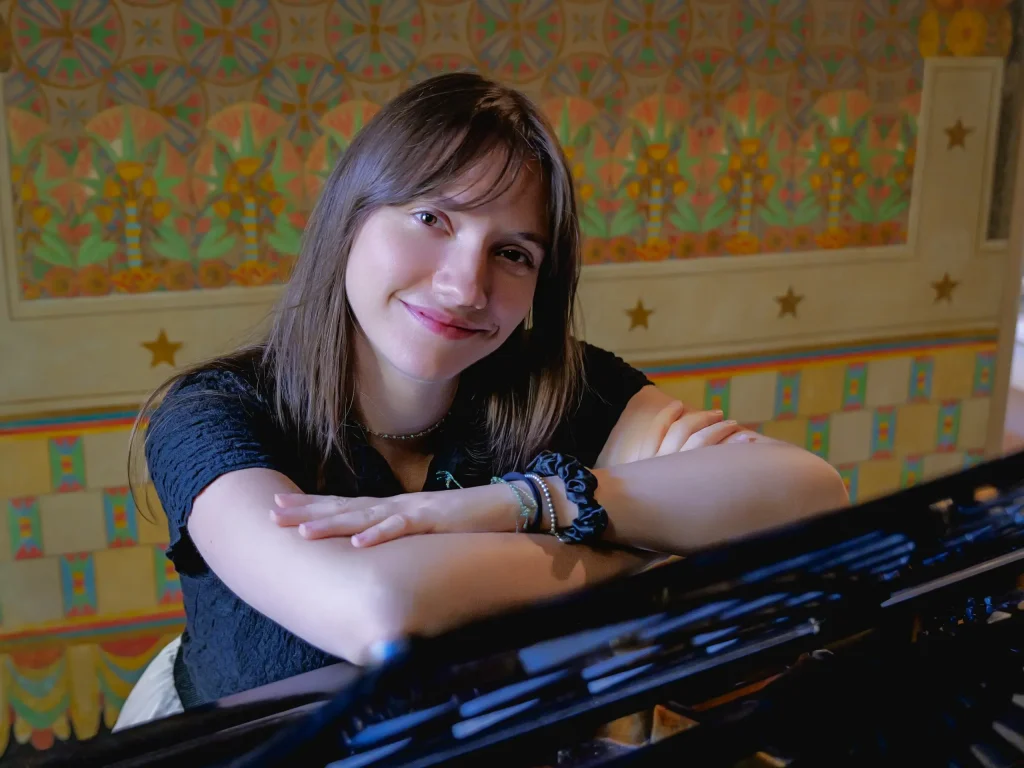
The cover image is by Mary Blengino.
Sources and Further Reading
[1] Beatriz Nunes — Official Biography
[2] INET-md, Universidade NOVA de Lisboa — Beatriz Nunes, Academic Profile
[3] Beatriz Nunes — Canto Primeiro, Official Album Presentation
[4] Beatriz Nunes — À Espera do Futuro, Official Album Presentation